Education
Equine Bone and Joint Disease
OCDOsteochondrosis is a term used to describe a group of disorders that affect the growing skeleton. Osteochondrosis occurs in young children, and young fast growing animals such as pigs, chickens, dogs, and horses. OCD or Osteochondritis dissecans is a specific bone disease which generally occurs (75% of the time) in the knees of people or in the stifle of horses. There is no known treatment or medical cure for OCD; horses or people.
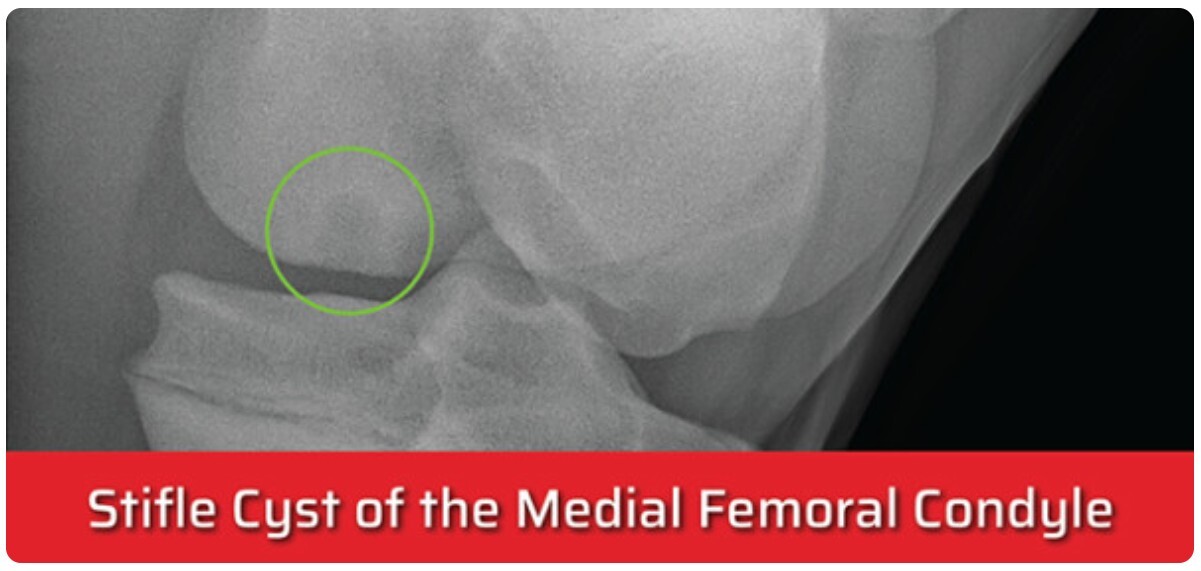
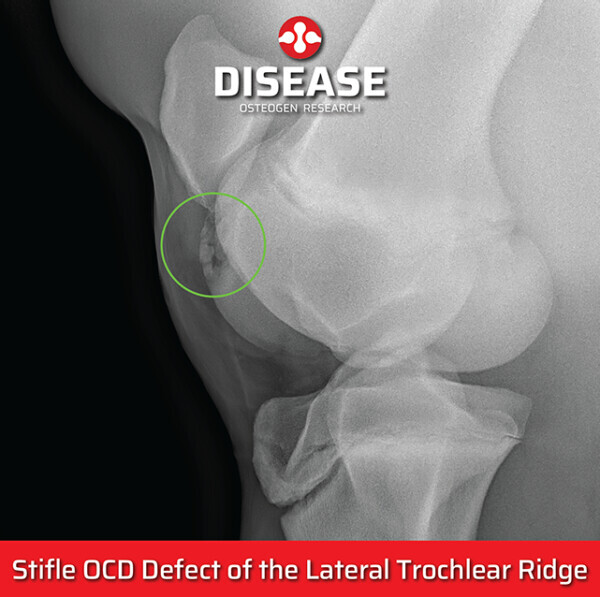
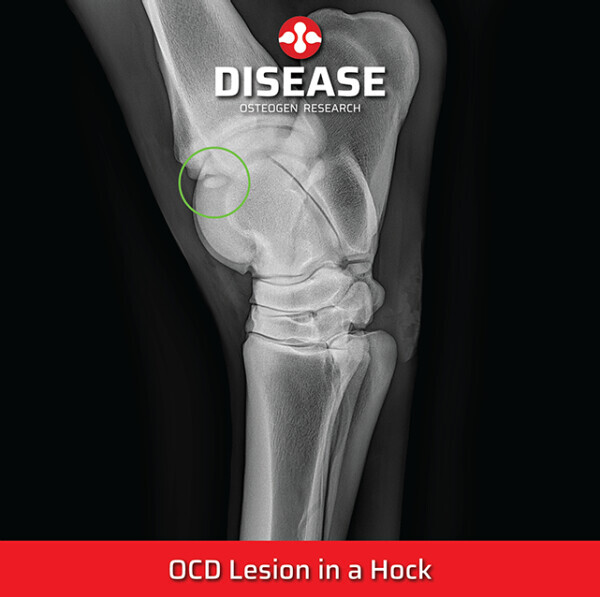
Basically, OCD is defined as a failure of normal calcification. In horses they have a predilection to specific areas in various bones: Stifles are probably the most common area where they primarily get two different forms: the “cyst” and the surface “defect”. Hocks are also common; sometimes the distal cannon bone can get cysts; and usually the higher up larger joints get them but much less frequently. Many young horses have OCD fragments; not true arthritic trauma induced fragments per se, but fragments that have formed from improper calcification.
Arthritis
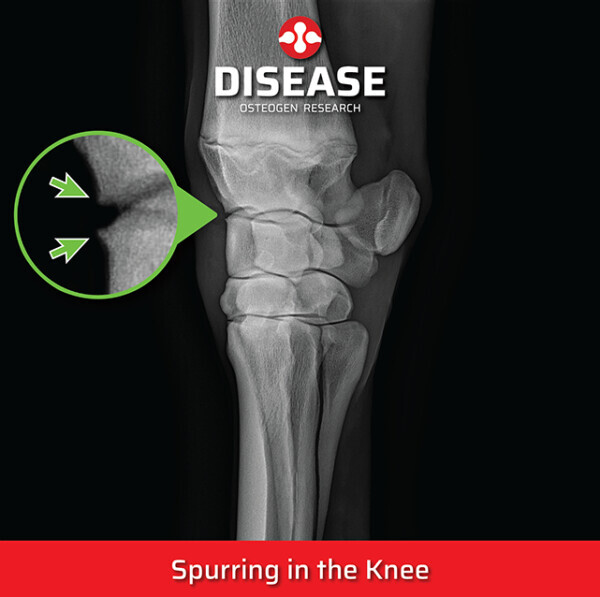
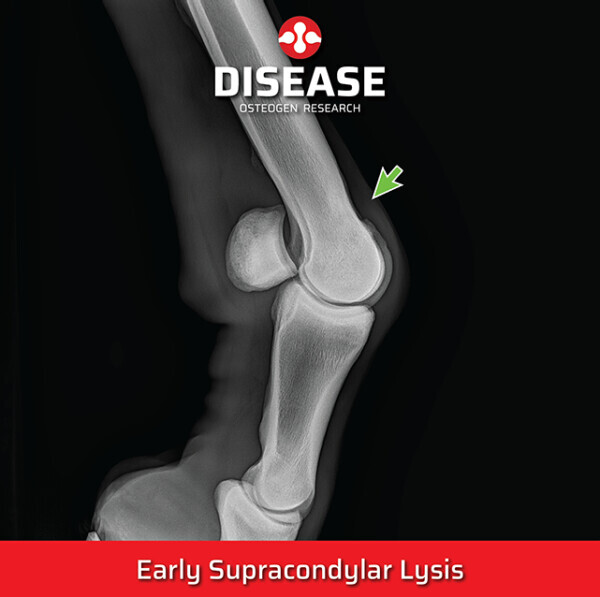
Radiographic evidence of arthritis and cartilage damage can be very subtle as cartilage does not become apparent on radiographs. Generally, with its advancement though, it causes deformation of the bones involved in the joint with formation of osteophytes, more commonly known as “spurs”. It can also cause actual deterioration (or “lysis”) of the bones in the joint. An example would be “Supracondylar lysis” in a horse’s ankles.
Traumatic Bone Injury
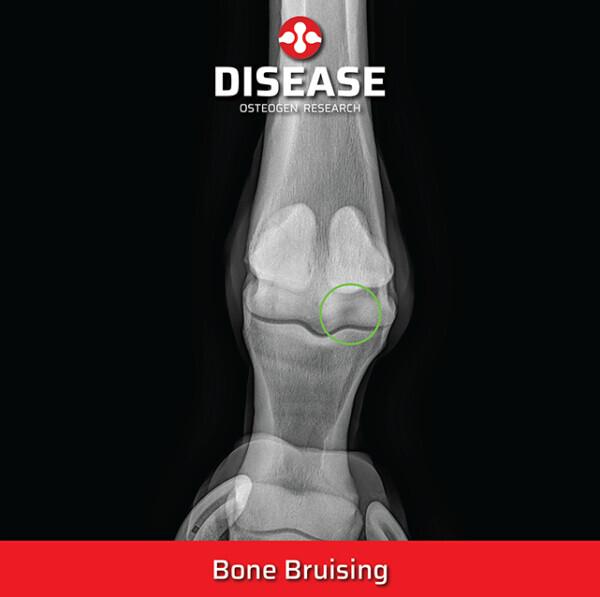
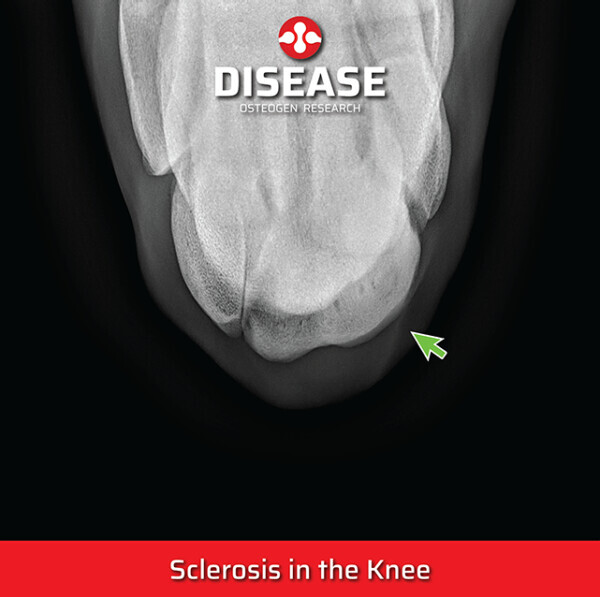
Other forms of disease would be “bone bruising” and “sclerosis”. Bone bruising occurs most frequently in the ankle joints of racehorses under extreme stress. It’s a form of loss of bone calcification probably due to the crushing of the bone and concomitant loss of blood supply. Sclerosis is somewhat the opposite: stress causes an abnormal increase in density because of the formation of too much bone to the point that it hardens and loses its inherent “flexibility”.